


Oil: between madness and profit.

Apr 14
14 min read

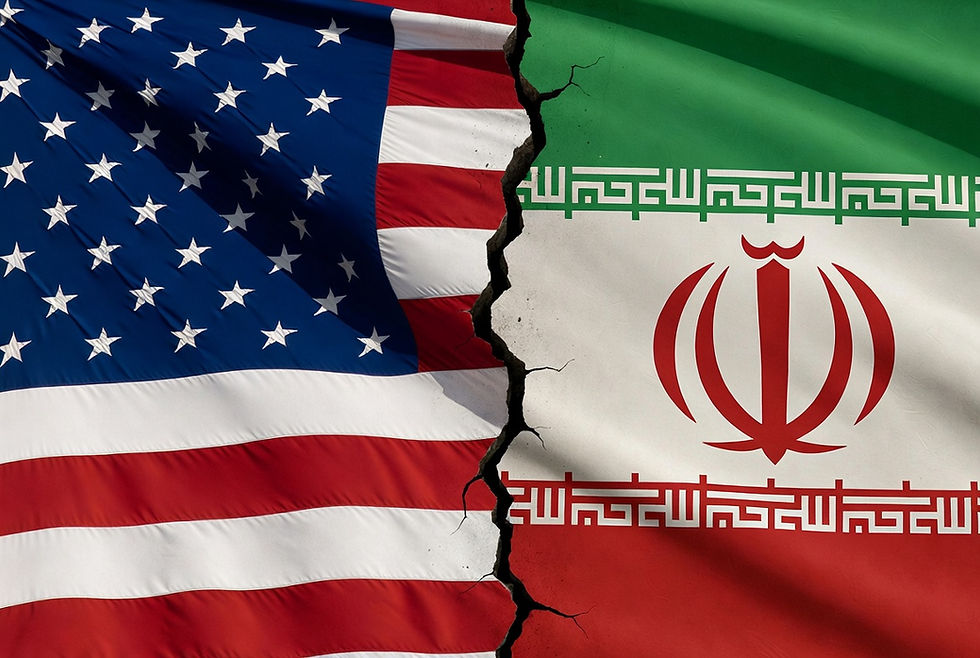
With the war in Iran, we are all going crazy over oil. After Iran closed the Strait of Hormuz, Europe has experienced days of ordinary madness.
Between the price of gasoline doubling in a few days, planes that will remain grounded, and governments asking their citizens to use cars as little as possible, I am seeing something I never thought I would witness in my lifetime.
I was always used to thinking that everything just worked. I never questioned empty supermarkets, refueling, or traveling. To me, it was a given that oil was extracted, transported, processed, and sold. With this crisis, the importance of oil has come to light in a rather glaring way.
This crisis situation brought two questions to mind.
The first is: what journey does gasoline take? That is, what trip must oil make to go from being underground to being inside my car's tank?
The second is: how important is oil? How much does this substance condition our lives?
Spoiler: the journey is a total mess and oil has us by the balls. Enjoy the read.
In Search of Black Gold.
Oil doesn't grow on trees, it doesn't regenerate like the sun or the wind, and it doesn't come out of the kitchen tap. If oil were flowing in your house, it would mean you've punctured a pipeline. No, you haven't become a millionaire; rather, you are a thief stealing private property from a multinational that generates more revenue than a G20 nation.
Oil was formed from the decomposition of organic beings over millions of years. This does not make oil a renewable resource. It goes without saying that once the well is dry, nothing more is extracted, and millions of dollars are lost.
The challenge every company in the oil business faces is to constantly find new wells to drill to keep the business active and generating profit. It’s no coincidence that Trump wanted to "annex" Greenland, an island rich in mineral resources, including oil.
The search for those new wells is no walk in the park because oil is not found on the surface. Black gold hides inside rocky pockets many meters underground. It’s a classic of life: if you want something big, you have to work hard. Let’s say in this case, you don’t just work hard, you also spend a lot.
A small geological premise: for a field to form, three elements must coexist, which geologists look for in seismic maps: the Source rock, where the oil originally formed; the Reservoir rock, composed of porous rock (like sandstone or limestone) where oil can migrate and accumulate; and a Trap and Seal, a rock formation, often dome-shaped, covered by an impermeable layer (like clay) that prevents the oil from escaping to the surface.
Everything starts with the study of the surface. Geologists, with their fancy instruments, roam the world—paid by oil companies—to look for places where oil might reside. Since black gold is nothing but the transformation of organic matter over millions of years, they look for sedimentary rocks that indicate the presence of an ancient marine or lake basin—places where most of the Earth's biology resided at the time.
How on earth do you analyze something underground that you cannot see to know if billions of dollars or just useless dirt lie there?
One uses either aerial and satellite photography, analyzing rock formations from above to identify structural anomalies, or Magnetometry and Gravimetry, measuring variations in the Earth's magnetic field and gravity. What the hell does gravity have to do with oil? Since oil is less dense than the surrounding rocks, small variations in the force of gravity—given that a liquid is sucked toward the center of the Earth less than a solid—can indicate the presence of potential sedimentary basins.
So, our geologists take selfies, see how the Earth sucks everything in (wondering why their partner doesn't do the same), until they notice something promising, like a conforming rock structure. Yes, but the oil is very deep down. Digging a hole with a shovel isn't exactly a genius choice. For goodness' sake, once finished you'd have the physique of Henry Cavill, but they are geologists, not Calvin Klein models.
Geologists, who aren't stupid, do something mega-intelligent: they trigger a controlled earthquake. How do you trigger controlled earthquakes? Don't worry, there's no ritual like a rain dance.
It depends on whether the geologists find a potential pocket on land or at sea. On land, special trucks called "vibrators" (or small explosive charges) are used to send shockwaves into the subsoil, while at sea, trucks aren't used for obvious reasons—though I’d love to see that scene—but seismic vessels are used instead, which utilize compressed air guns that generate high-pressure air bubbles.
The shockwaves travel through the ground or water, bounce off the different layers of rock beneath the ground or water, and return to the surface, where they are recorded by sensors called geophones (on land) or hydrophones (at sea). The collected data is processed by supercomputers to create detailed 3D maps of the subsoil.
Two problems now exist. We know there is a potential pocket. We just don't know if it's profitable or just a "flash in the pan." Oil companies, before spending tens of millions on extraction, want to be sure that the field covers the costs.
The only way to have near-certainty that there is oil, and that it is abundant, is to drill. At this point, an exploratory well is dug, known in the jargon as a wildcat. During drilling, the rock fragments that come up (cuttings) are analyzed, and electronic instruments (logging) are lowered into the well to measure porosity and the presence of fluids.
There is another problem. Despite advanced technologies, the success rate of exploratory wells is never 100%. It is a high-risk investment: a well can cost millions of euros and turn out "dry."
Costs and Revenues.
Costs.
Just to figure out if there is black liquid, tens of thousands of dollars are spent. A modern survey can cost between $20,000 and $100,000 per square kilometer on land. At sea, costs skyrocket: a seismic vessel has operating costs that can exceed $250,000 per day. Then that data must be analyzed, and processing via supercomputers and AI software adds more millions to the initial budget.
Just to give a small estimate based on real data: in 2024, the drilling of the Yopaat-1 exploratory well off the coast of Mexico was budgeted at approximately $109 million.
Once the analysis is done and it’s established that something is down there, you have to drill and extract what has been protected in that well for entire geological eras. This is the classic "expense, non-expense": if that well produces, the costs will be negligible; otherwise, we’re talking about a multi-million dollar hole in the water. Yes, but how many millions?
It becomes truly inaccessible for many. If the well is onshore (on land), we’re talking between $5 and $20 million.
If, unfortunately, the well is at sea (offshore), prices swell to between $30 and $60 million because you need jack-up rigs. If you are doubly unlucky and that damn pocket is in deep water, it even reaches $100 - $150 million and requires the use of high-tech drillships.
The daily cost of a drillship can vary between $400,000 and $500,000 per day. Every day of delay due to bad weather or technical problems is a financial hemorrhage.
Whether on land or at sea, there is another item on the cost list: when you are close to hell. The deeper you go, the more pressure and temperature increase, requiring special metal alloys and extremely expensive drilling muds.
And then we have good old politics. Operating in Greenland is one thing; operating in a powder keg like the Middle East is another. Operating in war zones or unstable areas requires massive budgets for private security and insurance.
Revenues.
If you’re asking the question "but what’s the point of spending so much for practically nothing?"—don't. Although an exploratory well might cost $100 million, a medium-sized field can contain hundreds of millions of barrels. At current prices (about $70-$80 per barrel, with peaks at 100), the potential value of a lucky discovery is billions of dollars, which justifies the enormous initial investment.
Just to put down a few numbers:
Low-production well (e.g., "Stripper wells" in the USA): Produces about 10-15 barrels per day. Revenue: ~$750 - $1,100 per day.
Average well (Onshore): Can produce between 100 and 500 barrels per day. Revenue: $7,500 - $37,500 per day.
High-productivity well (e.g., Saudi Arabia or Deep Offshore): Can exceed 3,000 - 5,000 barrels per day. Revenue: $225,000 - $375,000 per day.
Just to put everything in perspective, Saudi Aramco has declared profits (not just revenue) in very recent years that were higher than those of Apple, Microsoft, and Google combined. In 2024, the five largest oil companies (ExxonMobil, Shell, Chevron, TotalEnergies, BP) had net revenues of $100 billion. The entire overall oil market in 2024 was worth something like $4,438 billion. For 2025, there is talk of $5,300 billion.
Do you really think those hundred million in study costs are a lot?
How do I sell it?
I have my piece of land, my billion-dollar reservoir, my drill that penetrates the ground nicely, and I have the tanks to collect what I extract. Up to here, no problem.
The problem arises later. As long as my oil stays as it is, it’s useless to me. I just have a black, viscous substance in my hands. That oil must become fuel, bitumen, or plastic to then be resold and make billions. But how the hell do I sell it?
Well, this is something fascinating. The question is: what do you own? Follow the logic, because it is truly wonderful.
Take a company like Aramco, for example. This company owns both the wells and the refineries. What happens in this case? Aramco extracts the crude, loads it onto a tanker, and takes it to a refinery. Here the crude is refined, and the finished product is stored in enormous tanks. When the market calls, these are 'emptied' to load tank trucks that will transport the fuel or derivative products to end customers: gas stations, airports, or industries.
In this case, money is made everywhere—whether selling crude, because extraction has a negligible cost compared to the sales value, or on refining with fuels. So far, all simple.
However, there are two other cases. There are companies that have refineries and do not own wells (the company Saras, for example) and there are, for instance, States that have wells but no refinery, like countries such as Nigeria. What do you do in this case? Well, logic would say "the extractor sells to the refiner." In principle, it would be a simple idea, in line with the market concept we know. But it doesn't work that way.
What happens is more complicated. Follow me, because you can get lost. In these two cases, there is a "third party," a "trader." The trader is practically the most important figure in the entire crude production chain.
Take Nigeria as an example. It has the wells but no refineries. Let's say the tanker must go from the African state to Rotterdam. The crude is extracted, brought to the port, the tanker is loaded, and it sets off. At this moment, Nigeria owns the right of possession of the crude that will take it to Rotterdam, while the ship is owned by a shipowner.
The tanker doesn't arrive in Holland in a couple of days. It takes more than a month to dock at the destination port. What happens in those 50 days? In reality, that ship sails with its nice cargo. The crude on that tanker has a much more eventful existence. During this time, the ownership right of that crude can be sold and resold dozens of times by financial firms or banks. Why? Because it’s a frantic market where people speculate on a hundredth of a dollar. If a crisis suddenly breaks out in Brazil and immediate crude is needed, the price there goes up. A trader smells the deal, buys the cargo 'in flight,' orders the captain to change course, and takes it where the profit is maximum.
And does Rotterdam stay dry? No. At that very instant, another trader, perhaps with a ship in the middle of the Atlantic, sees that the price in Rotterdam has become competitive and diverts their ship there. It sounds crazy, but traders are the 'nervous system' of the world: they move energy where it’s needed (and where it pays best) in real time.
Not only that: they pay for the cargo in advance, speculating on the price. It can happen that the crude on that ship departing from Nigeria is not owned by the State, but was previously bought by a trader who will almost certainly resell that oil to another trader at a higher price during the journey. In this sense, traders are fundamental because they get everywhere, even in areas inaccessible to oil companies that have a public image to defend. Think of a nation at war or with controversial policies. Companies like Shell, which must protect their image, officially stay away from such a nation. Traders don't. They go, buy, and then resell the cargo to Shell. In this way, Shell has the crude but hasn't done business with a controversial nation, but with a trader, who can be any independent company.
Now comes the good part. The trader can be anyone. For example, the company Saras can act as a trader and buy crude directly from Nigeria, or it can buy a cargo at sea and divert it to Italy. You just need to possess the bills of lading. Whoever holds the original document has legal possession of the oil.
Furthermore, the Nigerian State can become a trader in turn, buying a cargo on the fly in case of internal production problems. Or a bank can buy a cargo, store it in tanks somewhere in the world, and resell the crude to refineries all over the planet.
Traders don't just maintain the balance of trade. There are two other advantages of the trader:
Traders are fundamental for oil companies. "But wait, don't many have total control of the chain?" Yes, but there are certain refineries that are set up to process a specific "diet" (e.g., sweet/light crude vs sour/heavy crude). Traders are masters at creating the perfect "cocktail" of crudes to optimize the yield of a specific refinery. In this case, the trader takes the missing crude and brings it to this or that company which will produce what it needs to produce.
Furthermore, the trader collects excess production from oil companies, takes other excesses from other producers, and loads a tanker with them, lowering costs. Because it’s one thing to rent three tankers and load them by a third; it’s another to load a single tanker.
What can I produce?
Everything. That is the perfect answer to the question. With crude oil, you can produce everything. Aside from wood, metal, and glass, everything else inside our homes is derived from oil.
Take a barrel of crude oil, for example. It’s about 159 liters. From a typical barrel of oil, you get an average of:
70 liters of Gasoline
40 liters of Diesel
15 liters of Kerosene
34 liters split between gas, heavy oils, asphalt, and chemical bases for plastic.
Put that way, it doesn't give much of an idea of what is produced from crude. Let's go into more detail.
1. Fuels (The main use).
Over 70-80% of a barrel ends up in the transport and heating sector: As products, we have LPG (Liquefied Petroleum Gas), like propane and butane, used for cooking, heating, or as car fuel. Then we have good old Gasoline, by far the most noble product, used for all internal combustion engines. We have gasoline's brother, Gas Oil (Diesel), used for cars, trucks, ships, and home heating. Then there is Kerosene, the essential fuel for jet engines, and finally, we have fuel oil, a heavy residue used in large power plants or in the engines of enormous merchant ships.
We all only know these products when thinking about crude refining. We aren't even remotely close to the potential crude has. It’s like a pig; nothing is thrown away.
2. Petrochemicals (The world of plastic).
This is the least visible part of refining, but perhaps the most important. Through a semi-finished product called "naphtha," oil enters almost every object we touch.
Let's start with polyethylene, polypropylene, and PVC. From shampoo bottles to car components, from toys to food packaging, all the way to the pipes where gas, water, electricity, and internet pass. All of this is derived from oil.
There are also synthetic rubbers, essential for producing tires. Since natural rubber from trees can no longer be extracted in sufficient quantities given the global demand for cars, crude is a perfect substitute, along with recycled rubber.
Finally, we have textile fibers such as polyester, nylon, and acrylic. Every piece of clothing we wear and buy in shopping malls comes from refineries.
I’m not finished yet.
3. Everyday products.
This is the most beautiful and fascinating part of all.
When we have a small villa, we want the garden to be healthy. So we use fertilizer. Not only that, we don't want the crops to be destroyed, so we use pesticides. Guess which substance they originate from. Yes, crude! Without oil derivatives, modern agriculture could not feed 8 billion people. We want to improve the planet's health, we try to save crops, while feeding and protecting them with oil, one of the most poisonous substances.
Furthermore, we want to make ourselves look good and stay healthy? Great—products like lipsticks, moisturizing creams, and even aspirin and many pill coatings contain compounds derived from crude. We want healthy skin and long lives, but we put crude in our bodies and on our skin.
Right, I almost forgot detergents. The surfactants that dissolve dirt are often of petrochemical origin.
4. The "Residues" (The bottom of the barrel).
As I said, with a pig, nothing is thrown away. With crude, too, nothing is discarded. What remains after "boiling" the oil is the densest and stickiest part. Even this less noble part has its dignity. Ever heard of bitumen? That black surface we walk, bike, ride, or drive on—which often has potholes everywhere—is the last waste product of refining.
We also have Lubricants, like oils and greases for engines and industrial machinery, so the car can last for years.
And then we have paraffin, used for candles, floor waxes, or for waterproofing milk cartons. The funny thing is that we light a candle to scent the room, without knowing that that candle is crude waste with which we are polluting the environment. Quite a show.
Fractional distillation of crude oil diagram
The Strait of Hormuz.
Since the Iranian crisis triggered by the United States exploded, everyone has been talking about the Strait of Hormuz as a possible economic plague. If you take into account that on average 20-21 million barrels of oil per day pass through it (combining crude and refined products)—about 25% of the world's maritime oil trade—you realize that closing that piece of sea is a massive problem. It’s not just about fuels, a drama in itself, but also clothing, road maintenance, and cosmetics. Countries like Qatar, for example, transport all refined products worldwide by sea. That’s why all of Europe and Asia are now hurriedly seeking a solution bypassing the United States. Without those barrels, the European economy, and thus the global one, would almost go to its knees because consumption would be higher than supply; eventually, production will stop, as will consumption, because you don't buy what isn't there.
Why does the price fluctuate?
Let’s start with a simple concept: the price of gasoline you pay is not decided by the gas station down the street, but by a chaotic dance of figures on monitors thousands of miles away.
The price is decided at the NYMEX in New York and the ICE in London. The price fluctuates every second because thousands of people bet on what will happen tomorrow. If a revolt breaks out in a producing country, the price rises in a millisecond even before a single barrel is actually blocked, because everyone buys and will resell at a higher price (while the ships are already traveling). The crisis in Iran is a glaring example: those 100 dollars per barrel are the result of pure speculation. Every day, billions of "paper" barrels (contracts) are traded, but only a small part of these will ever become real oil delivered to someone. If you think about it, if a barrel on a tanker is sold 10 times, it’s as if 10 barrels were sold, when in truth only one physically arrives at its destination.
However, the NYMEX is based on another factor, perhaps the only factor that matters: an association of twenty states (Saudi Arabia—the de facto leader and largest producer—United Arab Emirates, Iraq, Kuwait, Iran, Venezuela, Libya, Algeria, Nigeria, Republic of the Congo, Gabon, and Equatorial Guinea) who sit in Vienna to discuss the fate of the world. Here it is: OPEC+, the most powerful association in the world. They are the ones who decide how economies will go.
The game is very simple: if the price is too low, OPEC+ decides on a production cut. Less oil around means the price goes up; if the price is too high—thus with the risk of global inflation—OPEC+ increases production. More oil on the market means the price goes down.
If every week you see different prices, it is due to frantic speculation and a supply and demand that moves in a crazy way.
Final Thoughts.
We grew up thinking the world was a perfect machine, where we just had to turn a key or press a switch to activate a complex global choreography. But this crisis has shown us the truth: we are all sitting on a powder keg of paper and oil.
What for us is a trivial gesture—inserting the pump nozzle into the tank or buying a piece of clothing—is actually the final act of a brutal and extraordinary epic.
It is the result of explosions in the desert, of ships changing course in the dead of night for an extra hundredth of a dollar, of geologists reading the Earth's breath, and of sheikhs deciding the fate of our utility bills in a hotel room in Vienna.
M.

Comments